Productivity and competitiveness
More than 150 stakeholders from the agroecology sector gathered in Lomé on 4 Sep-tember 2026 to officially launch the Project for the Promotion of Agroecological In-novations in West Africa (PAI-WA). This new project is coordinated by the ECOWAS Regional Agency for Agriculture and Food (RAAF) and funded to the tune of 20 mil-lion euros, of which 10 million comes from the French Development Agency (AFD) and 10 million from the European Union (EU) through its DeSIRA+ funding line.
Building on the West Africa Agroecology Programme (PAE), which ran from 2018 to 2025, the PAI-WA aims to improve the incomes of West African family-run agroecological farms and strengthen their resilience to climate change, by using agroecology to sustainably increase their production.
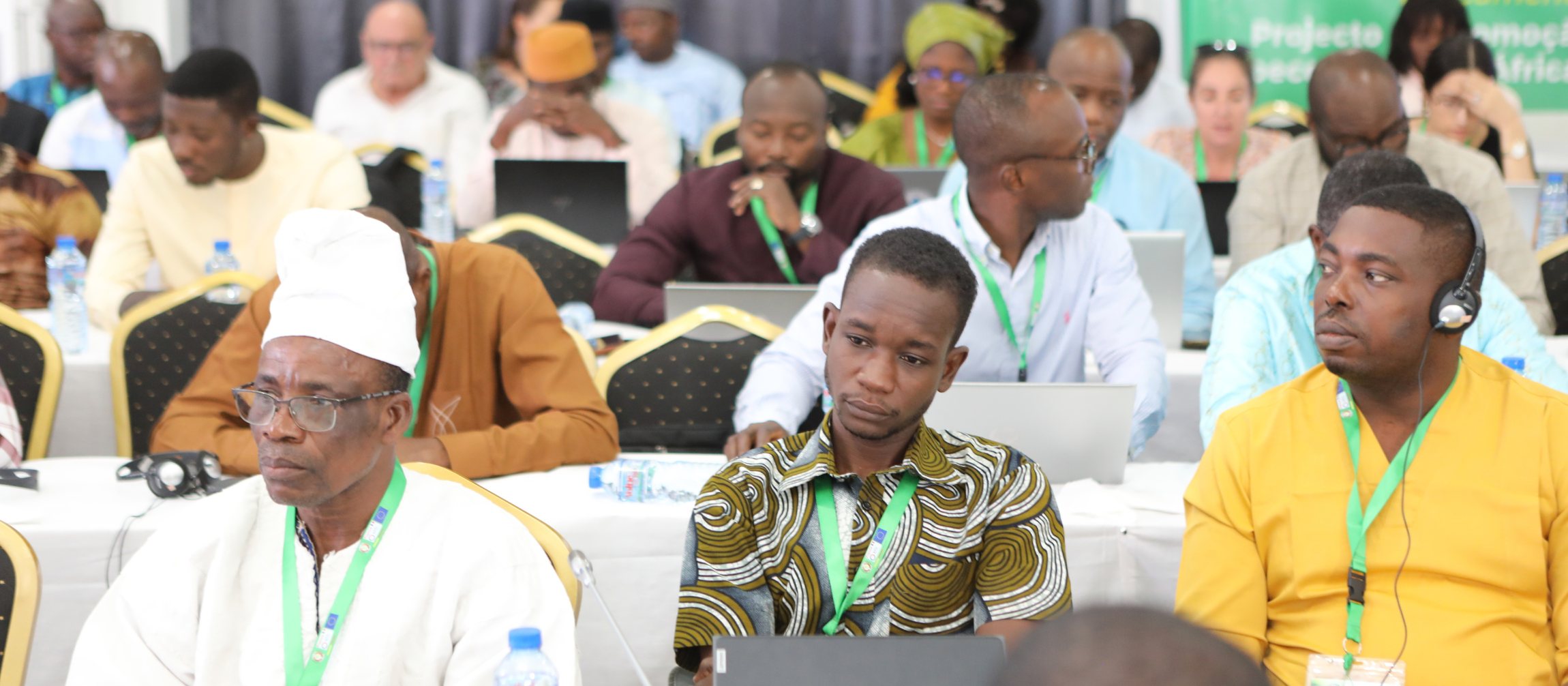
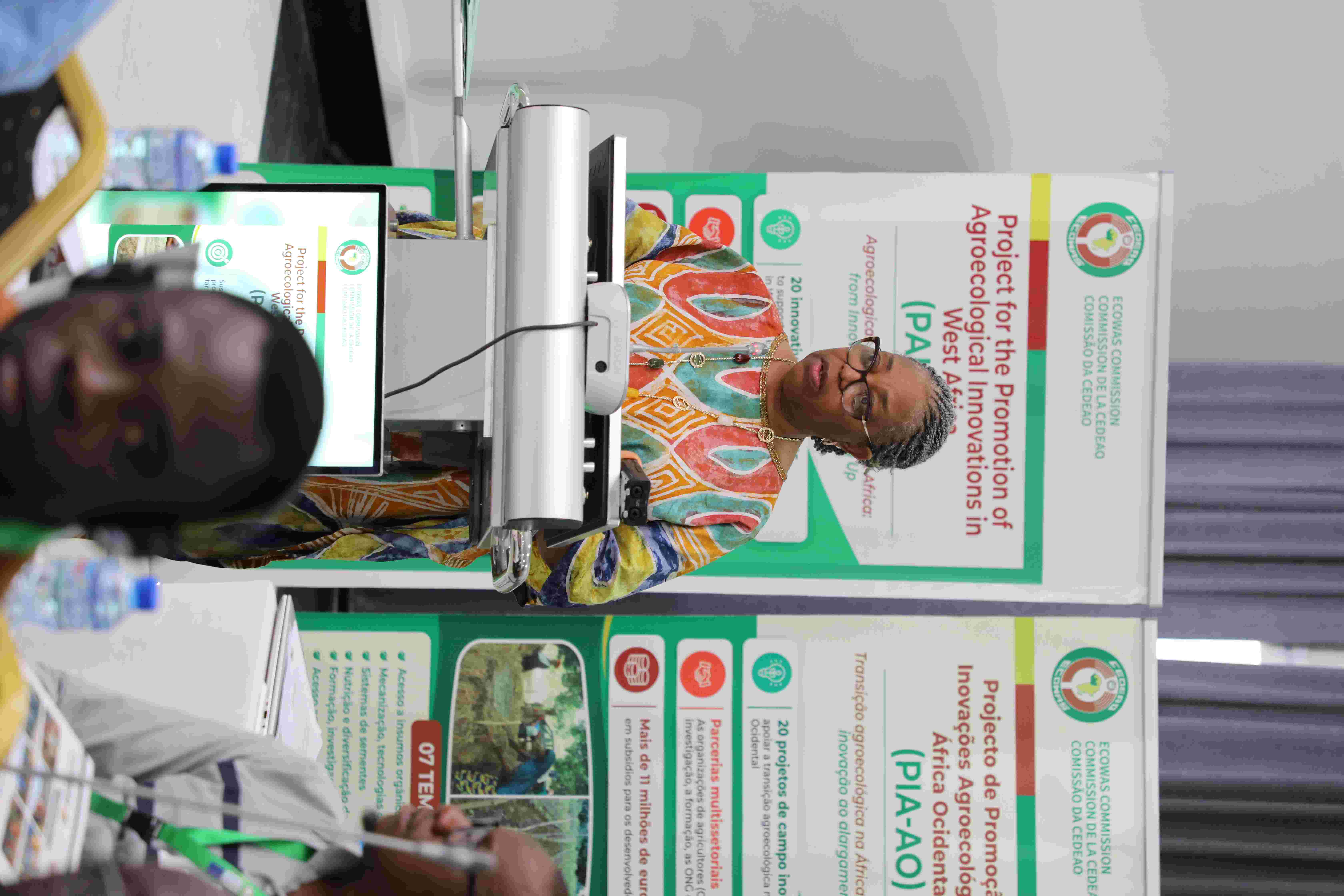
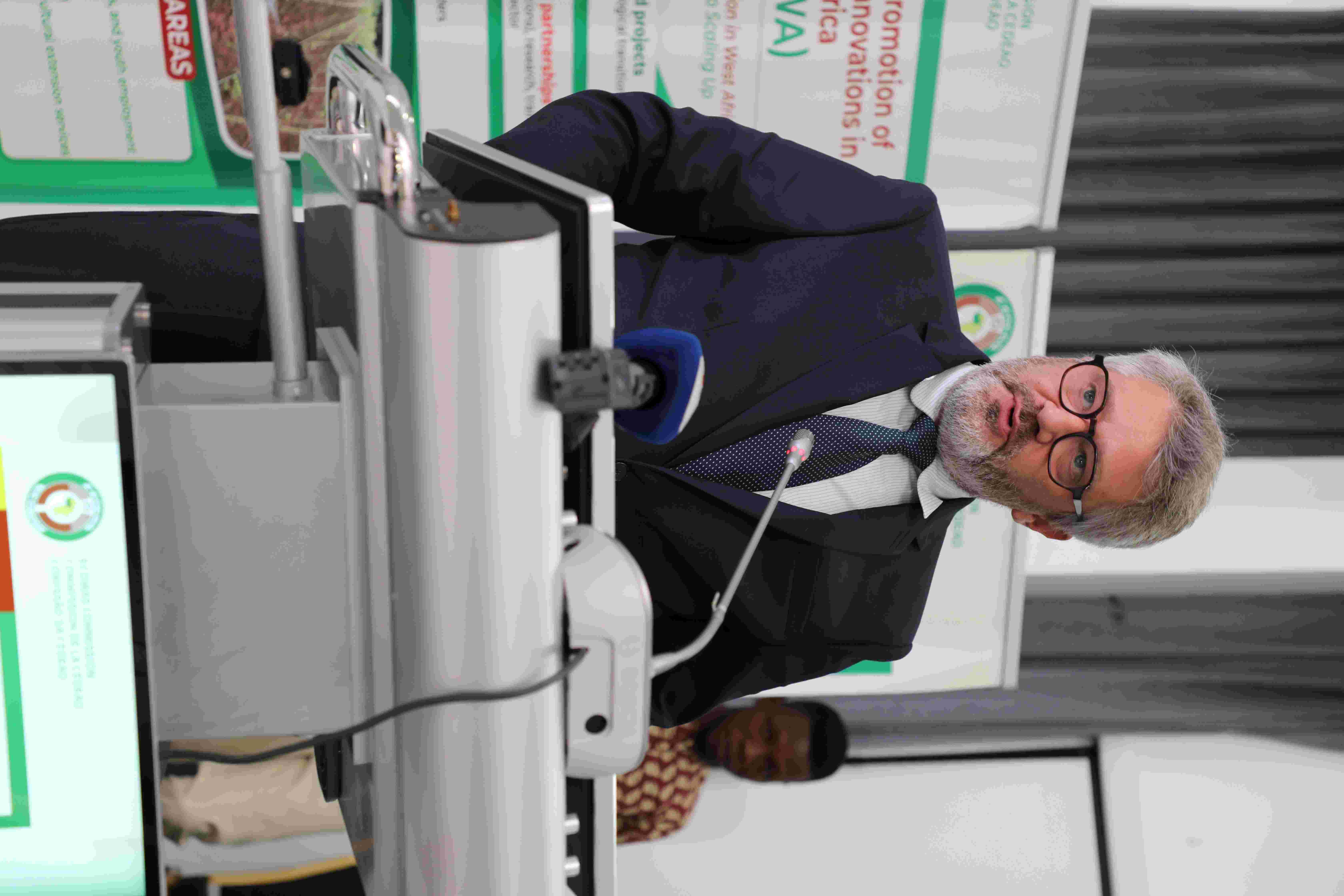
During the ceremony, regional institutions, technical and financial partners, and implementing partners reached a shared understanding of the project’s ambitions and challenges. They were briefed on the project’s objectives, expected outcomes and main components. The official launch ceremony for the PAI-WA provided an opportunity for the Resident Representative of the ECOWAS in Togo, Ms Emily Deweh Gray; for the Representative of the European Union, Mr Traoré Abdoulaye; the Director of the French Development Agency in Togo, Mr Benjamin Neu-mann; and the Technical Adviser representing Togo’s Minister for Agriculture, Fisheries, Live-stock and Food Sovereignty, Dr Lombo Yao, to reaffirm their commitment to agroecology whilst welcoming the launch of the project. In their speeches, they essentially emphasised that agroe-cology today is not an option, but a necessity and a credible path towards building an agricul-tural sector that is productive, resilient and sustainable.
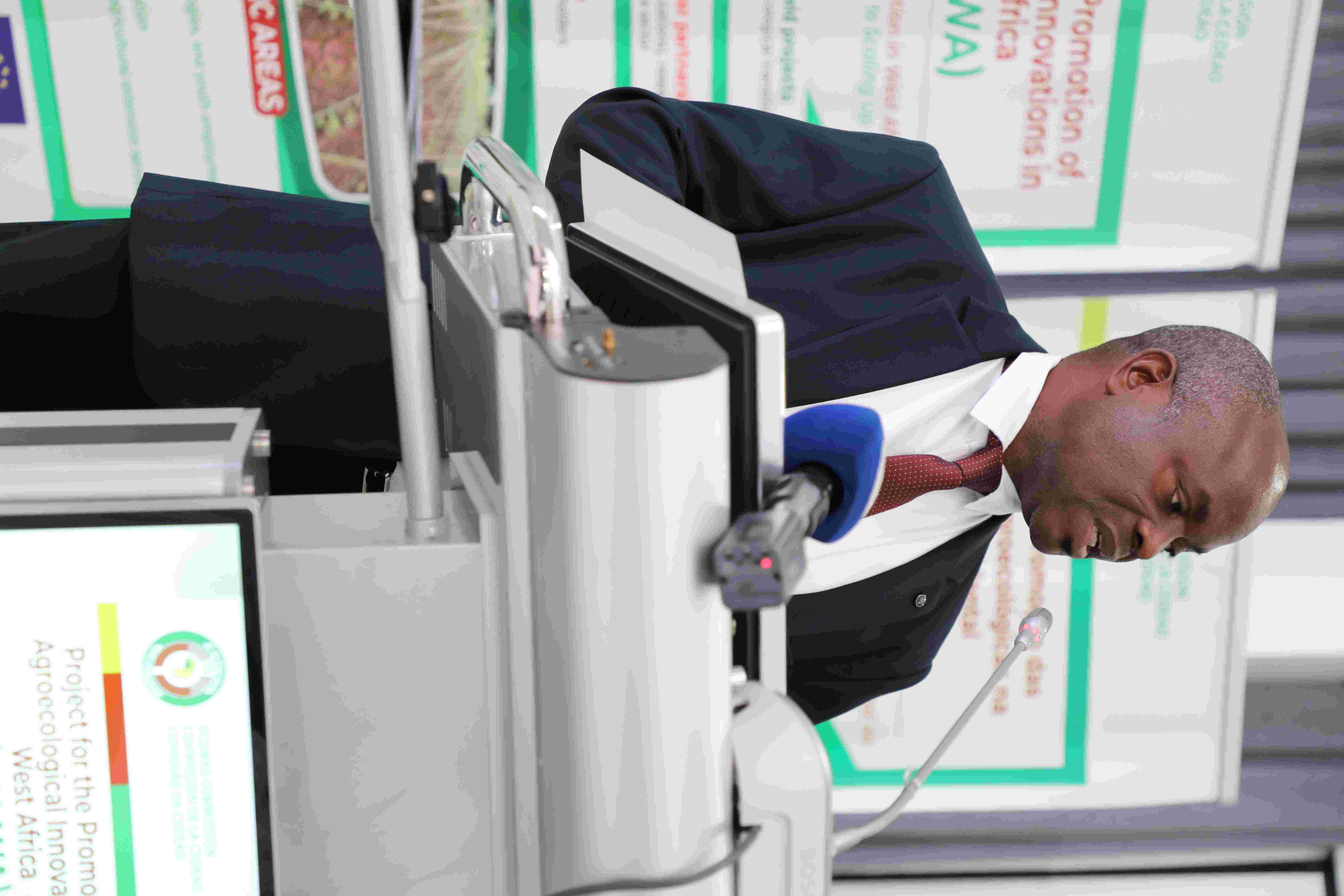
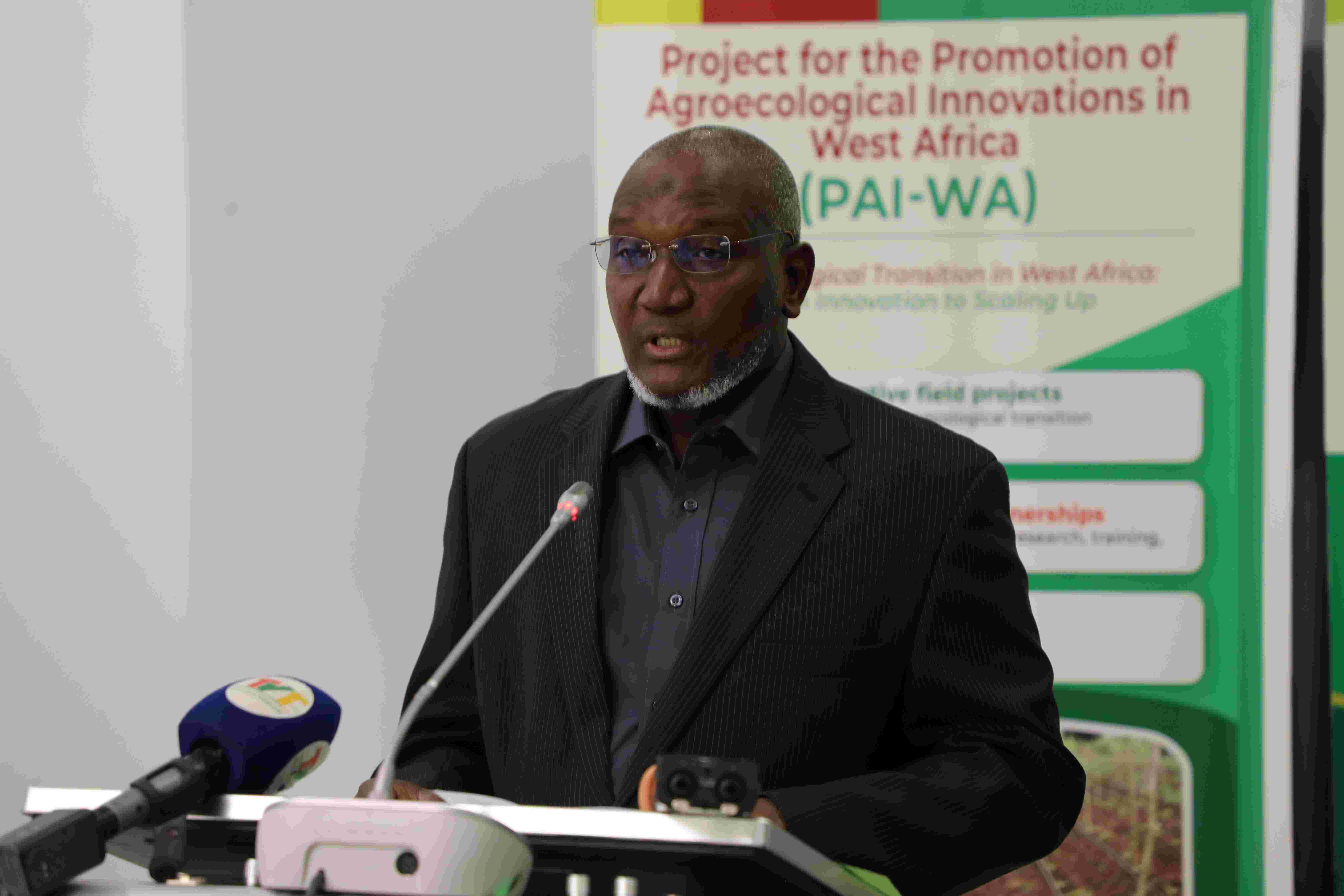
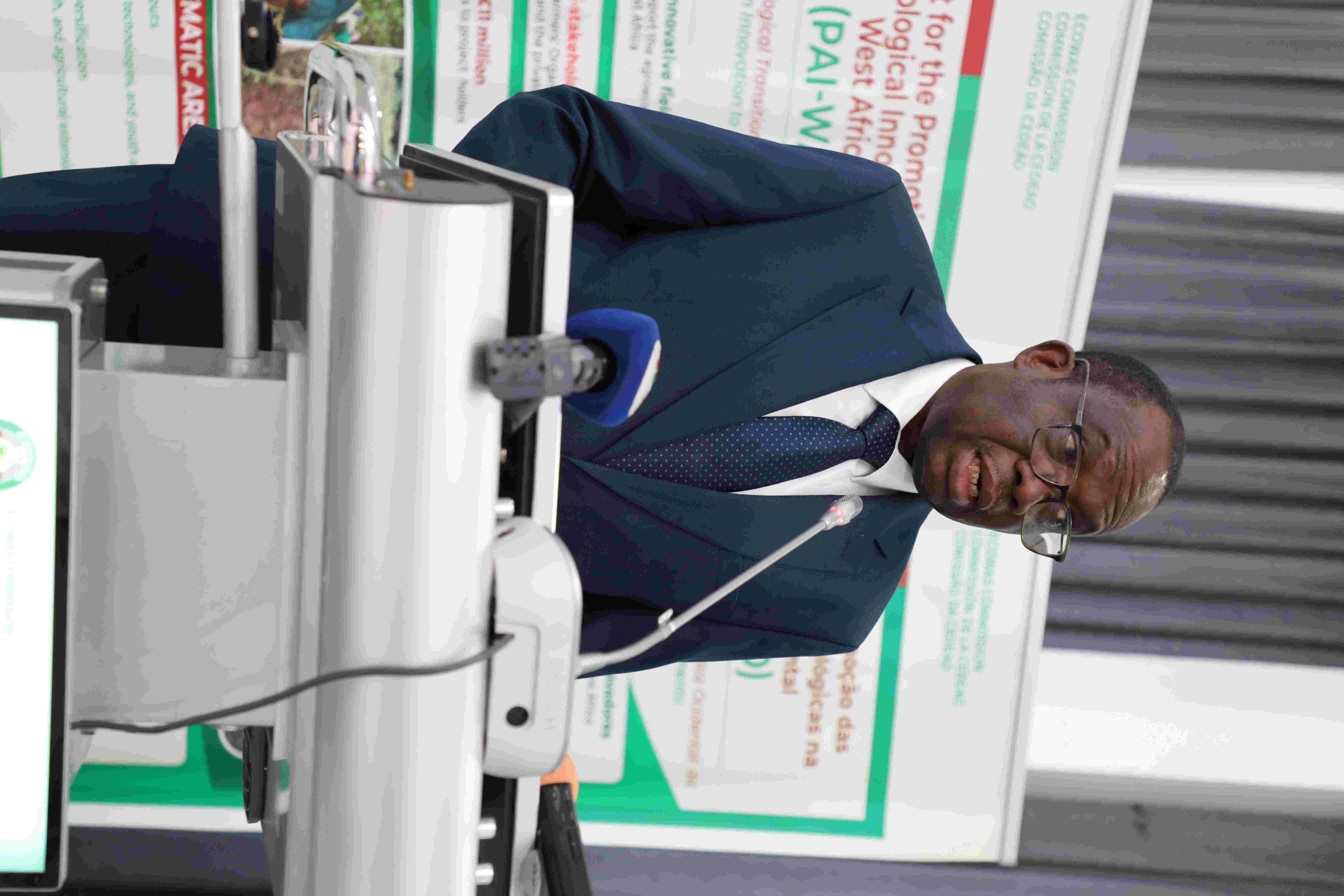
Speaking on behalf of the ECOWAS Commissioner for Economic Affairs and Agriculture, Mr Dehpue Yenpea Zuo, the Executive Director of RAAF, Mr Konlani Kanfitin, emphasised that “For ECOWAS, this new project is a concrete response to the adverse effects of climate change, which are undermining our production systems and threatening food security. It enables the innovations developed under the Agroecology Programme to be scaled up. It therefore forms part of the implementation of ECOWAS’s commitment to promoting agroecology, as set out in the regional agricultural policy known as ECOWAP.”
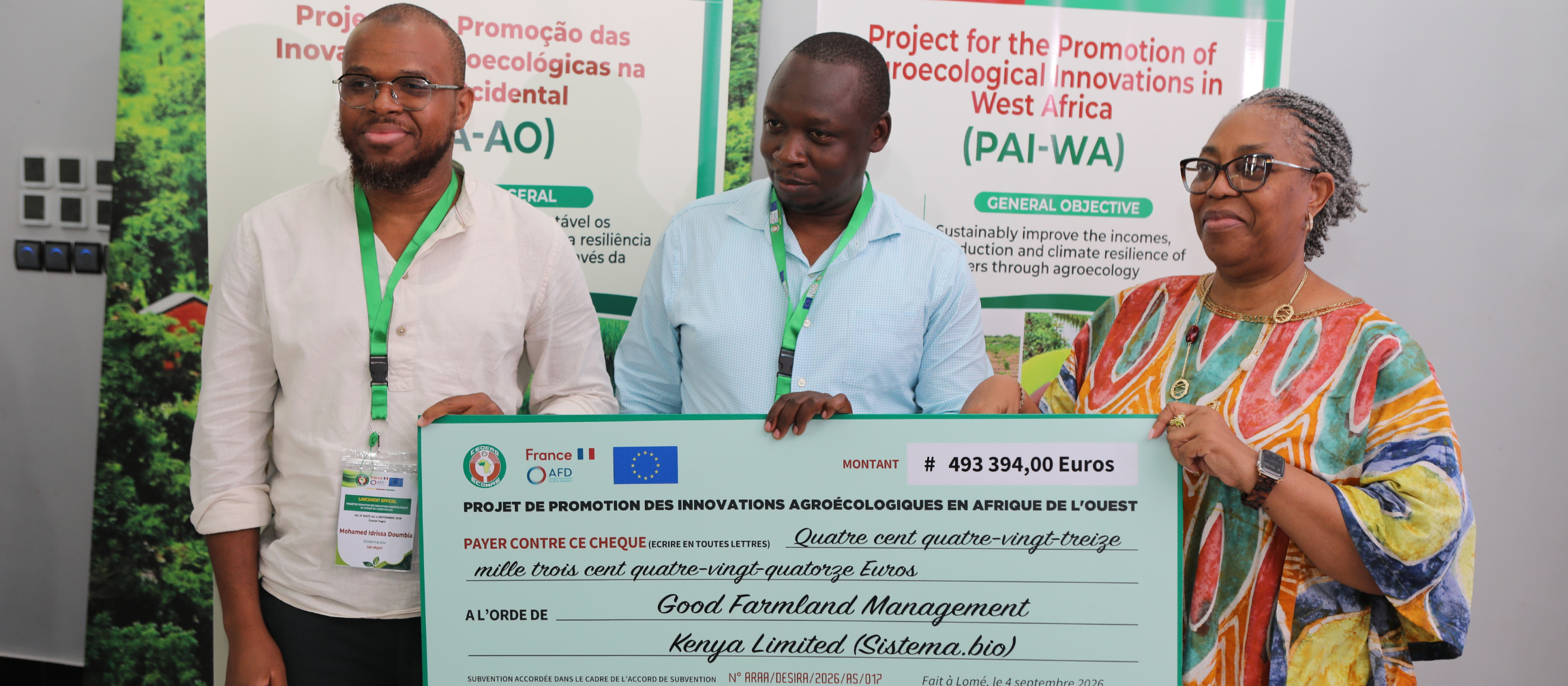
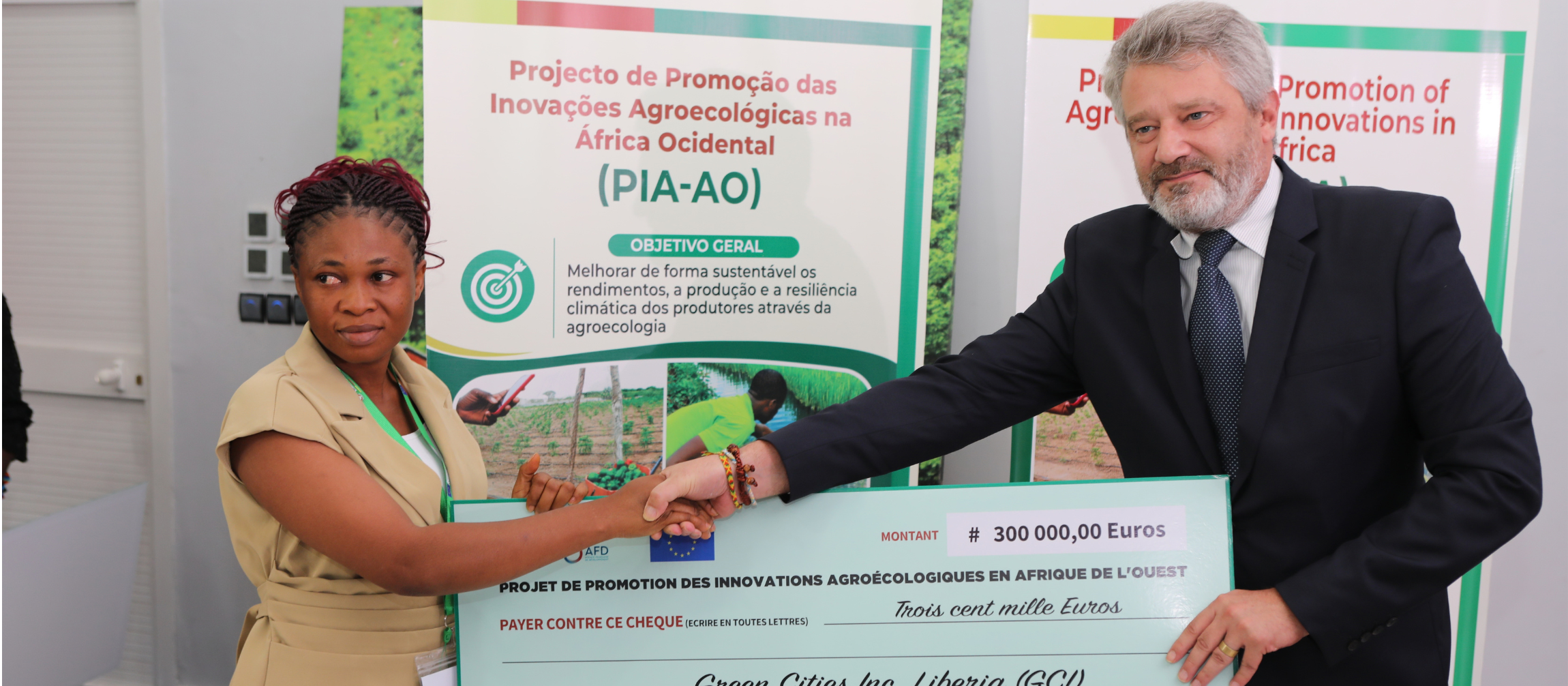
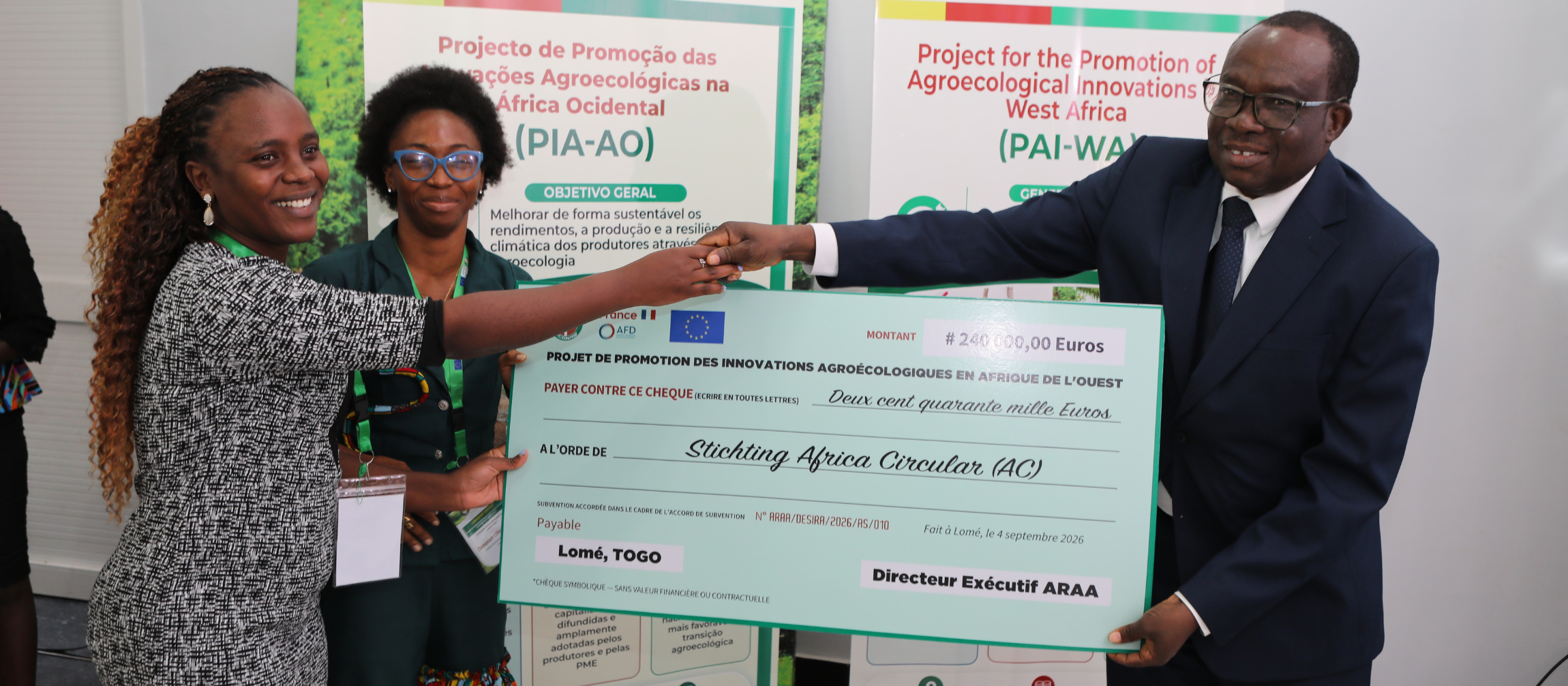
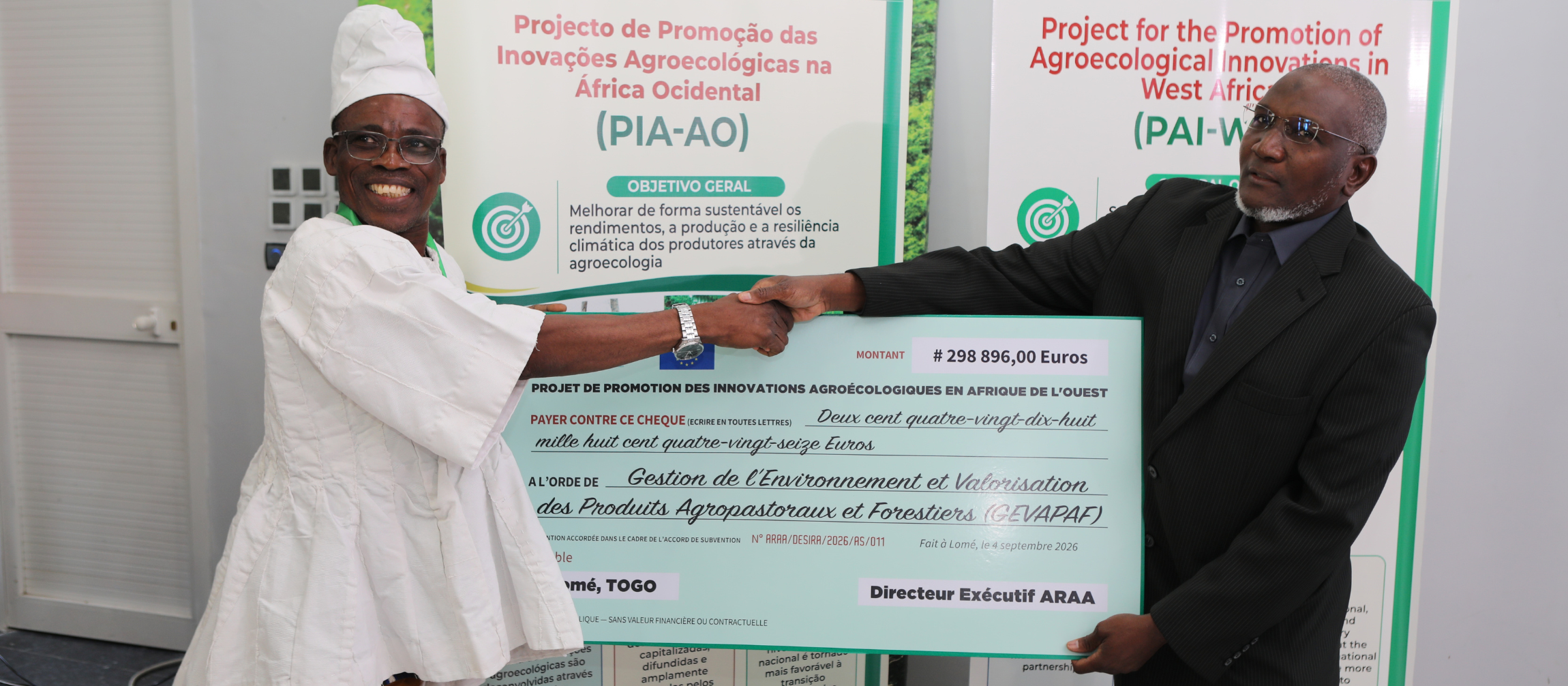
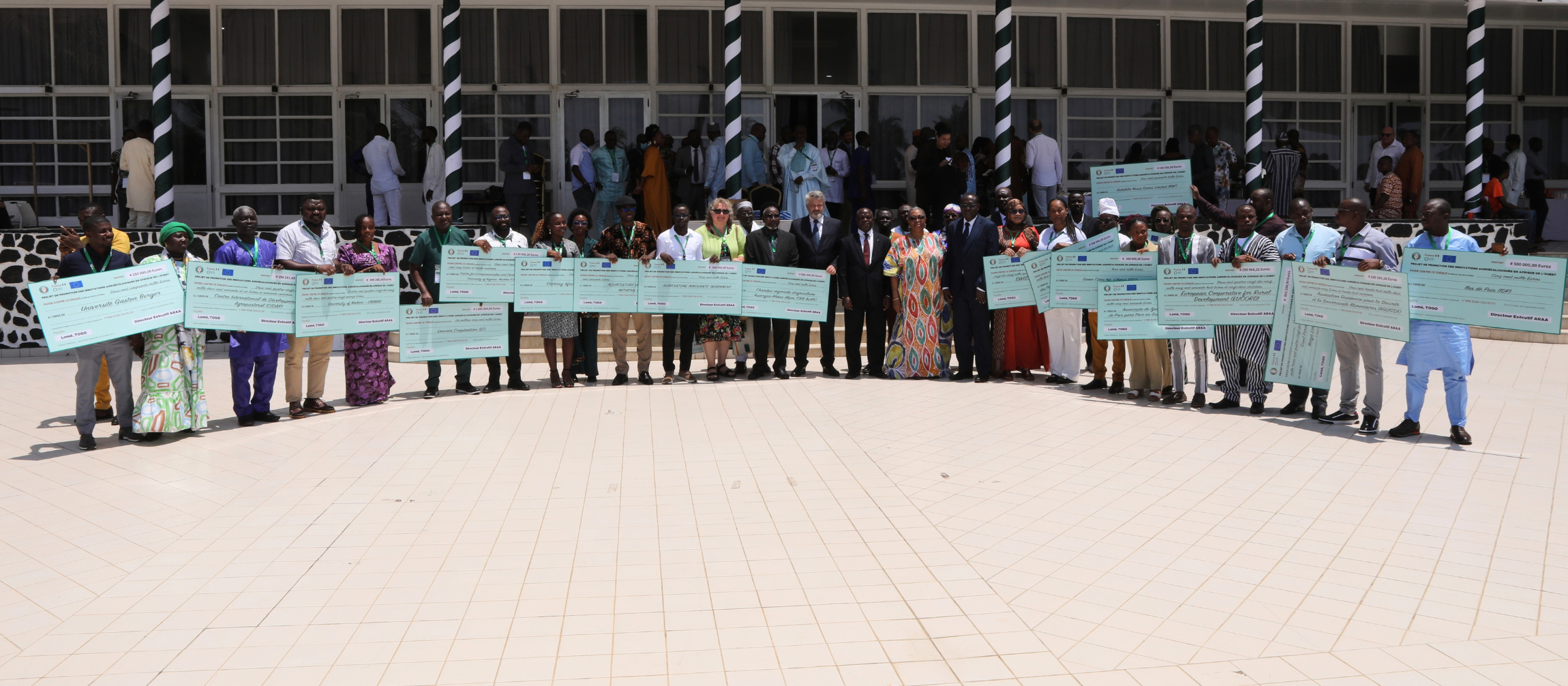
Another highlight of the ceremony was the official presentation of grant cheques to the twenty (20) multi-stakeholder project leaders selected following a regional call for proposals for field projects aimed at testing and disseminating agroecological innovations. In addition to the field projects, the PIA-AO relies on regional partners: the Network of Agricultural and Rural Advisory Services in West and Central Africa (ReSCAR-AOC) for the integration of agroecology into agri-cultural advisory services; the Alliance for Agroecology in West Africa (3AO) for dialogue on pub-lic policy; and a consortium of universities in the region, for an agroecology MOOC tailored to the West African context. These three regional institutions also received their cheques. Of the total budget of 20 million euros allocated to the PAI-WA, approximately 12 million euros are directly earmarked for funding field projects, to support the implementation of activities.
Prior to the official launch of the PAI-WA, the implementation teams of the on-the-ground pro-ject leaders and the project’s regional partners received training in monitoring and evaluation, as well as administrative and financial procedures, to ensure the project is implemented in a compliant, effective and harmonised manner.