

Food security
MESSAGE FROM THE EXECUTIVE DIRECTOR OF RAAF TO THE WEST AFRICAN AGRICULTURAL COMMUNITY ON THE OCCASION OF WORLD FOOD DAY 2026
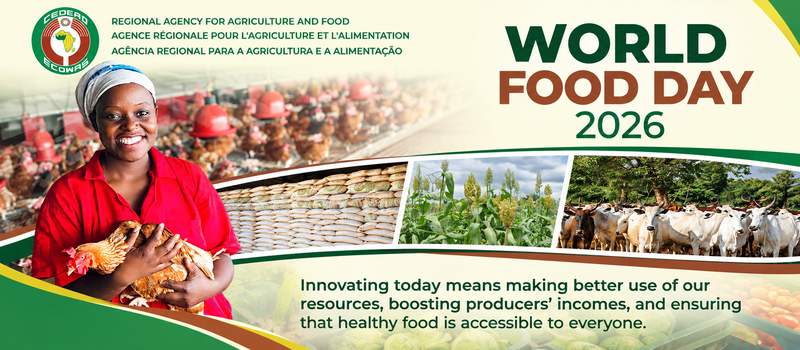
‘Innovate today. Nourish tomorrow’
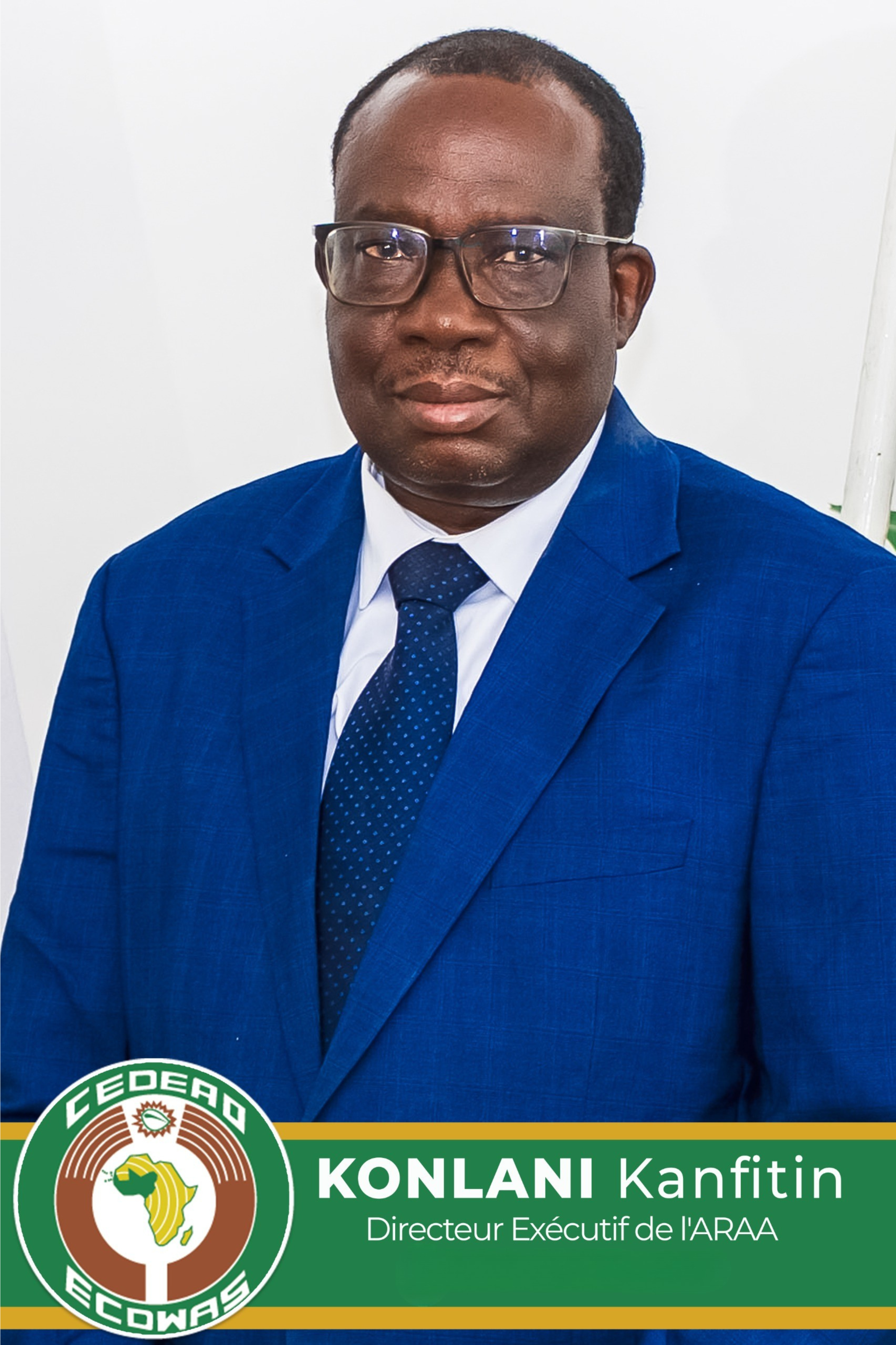
On the occasion of the World Food Day, celebrated on 16 October each year, I would like, on behalf of the ECOWAS Regional Agency for Agriculture and Food (RAAF), to extend my warmest greetings to women and men farmers, livestock farmers, fishers, processors, traders and all stakeholders in West African food systems.
This year’s theme for 2026, ‘Innovate today. Nourish tomorrow’, reminds us that the sustainable food and nutritional security of our populations depends on our ability to anticipate needs and challenges, to harness local knowledge and expertise, and to draw on the potential offered by technological and digital innovations to achieve the ‘Zero Hunger’ targets we have set for 2030 under the Sustainable Development Goals.
In West Africa, agriculture remains a vital pillar of our economies, our jobs and our livelihoods. Faced with the many challenges it confronts, innovation is no longer an option; it is a strategic imperative for strengthening our food sovereignty and guaranteeing every citizen sustainable access to sufficient, healthy and nutritious food.
That is why, as part of the implementation of the ECOWAS Agricultural Policy (ECOWAP), our priority is to make innovation a driving force for the sustainable transformation of West African agriculture and food systems.
Through regional initiatives and programmes supported by ECOWAS and implemented in collaboration with its Specialised Agencies, Member States and Partners, RAAF is contributing to this process of transformation. Interventions aimed at enhancing the resilience of food systems, disseminating agricultural innovations, developing value chains and strengthening regional food security mechanisms help to build collective responses to the challenges facing our region. In this regard, several outcomes bear witness to ECOWAS’s actions for the benefit of the population.
The region is working alongside Member States, through the Regional Food Security Reserve – which holds nearly 60,000 tonnes of cereals – to provide a concrete response to the continuing rise in the number of people facing food and nutritional insecurity.
In the area of school feeding, 44,940 students (50% of whom are girls) in 278 schools are benefiting from initiatives focused on local production in vulnerable rural areas of the region.
Regarding strengthening the resilience of vulnerable populations, 1.32 million food system stakeholders (26.70% of whom are women) have access to hydrometeorological and agrometeorological services, and 1.16 million farmers have adopted climate-smart agricultural technologies and services through the dissemination of 172 innovative technologies.
As rice is a key staple food in the sub-region, ECOWAS’s support for the development of 13 National Rice Action Plans has helped to mobilise US$1.5 billion in funding commitments at a donor roundtable to boost the rice sector in the sub-region.
Thus, preparing for tomorrow’s food security begins today, by capitalising on every relevant innovation and strengthening effective partnerships to attract greater investment, with a view to building food systems capable of meeting the needs of current and future generations. This calls on us to create the conditions to fully harness the great potential for innovation among the youth of our region. This imperative justifies the funding provided to specialised national centres and institutes, which has enabled the training and skills development of more than 27,000 young women and men in the fields of research and in various professions contributing to the development of sustainable agri-food systems, between 2023 and 2026.
We must maintain this momentum and invest further in the application of research results, strengthen links between research and producers, facilitate the adoption of appropriate technologies, develop agrometeorological information and agricultural advisory services, promote agroecology and climate-smart agriculture, and improve the storage, processing and marketing of agricultural products.
RAAF reaffirms its determination to support the efforts of ECOWAS Member States to accelerate regional agricultural transformation, strengthen the resilience of rural communities and thereby contribute to the achievement of the ECOWAP objectives.
Together, let us make innovation a driving force for food sovereignty, shared prosperity and sustainable development in West Africa.
Happy World Food Day to you all !