Food security
Review process for the regional food security storage strategy : the Steering Committee endorses the progress report and provides guidance
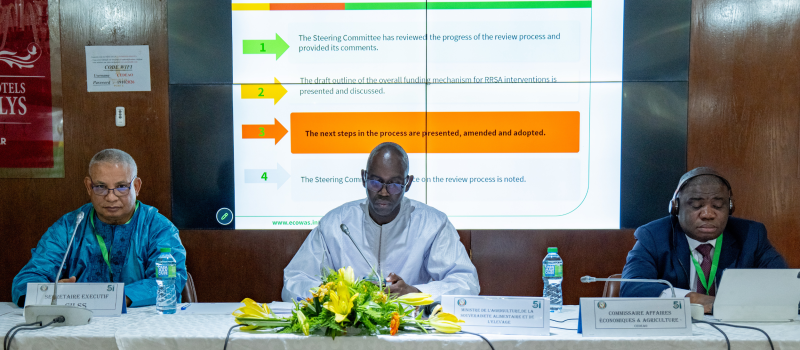
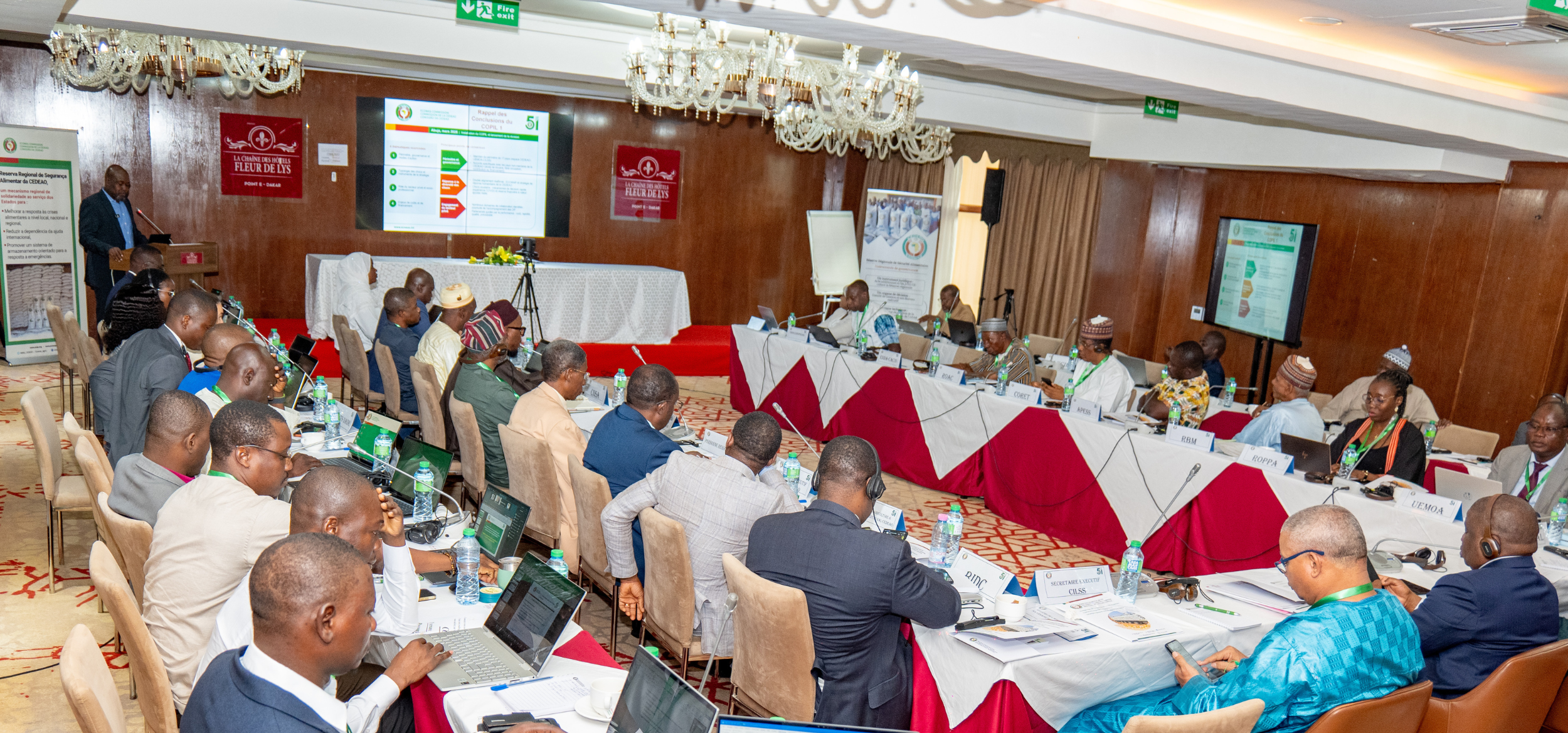
The Economic Community of West African States (ECOWAS) Commission organised the third meeting of the Steering Committee for the review of the Regional Food Se-curity Storage Strategy (RFSSS) on 20 and 21 October 2026 in Dakar. The meeting provided an opportunity to review the progress of the process launched in 2025, to discuss the overall funding mechanism for interventions by the Regional Food Secu-rity Reserve (RFSR) and to define the next steps in the work.
Since the first quarter of 2025, the ECOWAS Commission, the West African Economic and Mone-tary Union (UEMOA) Commission and the Permanent Inter-State Committee for Drought Con-trol in the Sahel (CILSS) have been jointly leading the process of revising the strategy and ad-justing the operating procedures of the RFSR.
DThis initiative aims, in particular, to consolidate achievements, adapt regional mechanisms to current food security challenges and ensure their consistency with the ECOWAP’s 2035 vision. Since the second meeting of the Steering Committee in December 2025, work has focused in particular on consultations with producer organisations and their regional networks, the launch of national consultations in Member States, the identification of areas where the RRSA requires adjustment, and the development of a draft comprehensive funding mechanism for its inter-ventions.
During their meeting in Dakar, the members of the Steering Committee – comprising the Rep-resentative of the Minister of Agriculture, Food Sovereignty and Livestock of Senegal, repre-sentatives from ECOWAS, UEMOA, CILSS and the BIDC, as well as the regional networks of agri-cultural producers and livestock farmers – the technical and financial partners of ECOWAP and the Rural Hub, reviewed the progress made and the draft comprehensive financing mechanism for the RRSA’s interventions before approving the next steps.
The Steering Committee commended ECOWAS for the progress made before proposing guide-lines to steer the rest of the revision process. It recommended accelerating the process of revis-ing the Regional Food Security Stockpiling Strategy and the Regional Food Security Reserve, in particular by carrying out technical studies, further developing the comprehensive financing mechanism and mobilising predictable and sustainable regional resources.
The Committee also emphasised the need to strengthen governance and coordination between ECOWAS, UEMOA and CILSS, as well as the complementarity between regional and national stockpiling mechanisms. The recommendations also cover improving intervention procedures and procurement from producer organisations, adjusting the strategic framework and performance monitoring mech-anism, and strengthening consultation with Member States and synergies between mecha-nisms for preventing and responding to food, nutritional and pastoral crises.

In the face of growing challenges arising from regional and international crises, the Executive Secretary of CILSS, Dr Abdoulaye Mohamadou, and the Secretary-General of Senegal’s Ministry of Agriculture, Food Sovereignty and Livestock, Ousmane Mbaye, emphasised the importance of the Regional Reserve, which remains a key instrument for strengthening Member States’ col-lective capacity to tackle food and nutrition crises whilst reducing the vulnerability of the most at-risk populations. In this regard, the ECOWAS Commissioner for Economic Affairs and Agricul-ture, Mr Dehpue Yenpea ZUO, emphasised that ‘We must rethink, from a long-term perspective, the conditions that will enable our regional stockpiling mechanism to respond more effectively, predictably and sustainably to the needs of Member States and their populations’.
Through this coordinated approach, ECOWAS and its partners aim to strengthen the comple-mentarity of storage mechanisms, improve regional capacities to anticipate and respond to food crises, and bolster the resilience of vulnerable populations in West Africa, in line with ECOWAP’s objectives regarding food security and sovereignty.
About the Regional Food Security Reserve
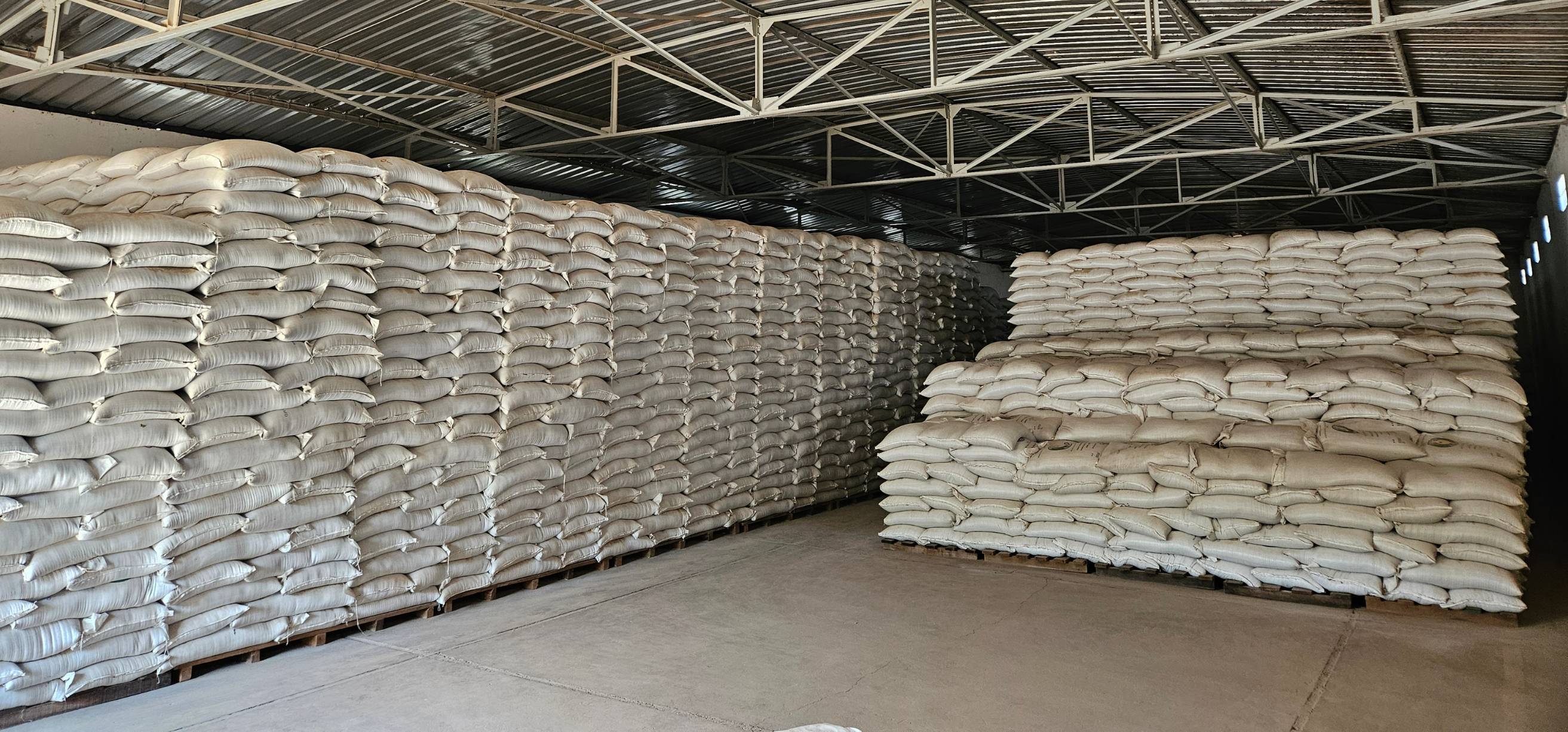
Established in 2013, the Regional Food Security Reserve is an ECOWAS instrument of regional solidarity designed to complement national and local mechanisms for responding to food crises. It forms part of the Regional Food Security Stockpiling Strategy and contributes to the implementation of the Community’s agricultural policy (ECOWAP).
The RFSR’s purpose is to mobilise and make emergency food resources available to Member States in order to respond rapidly to crisis situations, particularly those caused by shortfalls in agricultural production, droughts, floods, conflicts or other shocks affecting the availability of and access to food. It is based on an approach that complements and is coordinated with na-tional food security storage mechanisms and local stocks, in accordance with the principle of subsidiarity.